

Commercial HVAC Service
Diagnose the problem. Repair the system.
Philco diagnoses and repairs new, aging, and specialized commercial HVAC equipment. When a responsible repair is possible, the goal is to keep useful equipment operating safely and reliably.
Commercial HVAC Diagnosis, Service and Repair
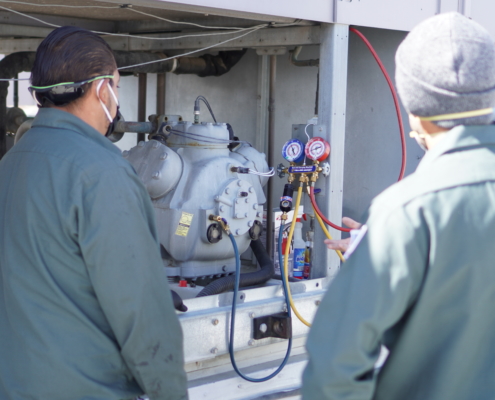
Repair Before Replacement
Existing equipment may still have value.
Equipment age alone does not determine whether a commercial HVAC system should be replaced.
Philco evaluates the failure, overall equipment condition, safety, reliability, service history, parts availability, repair cost, and remaining practical value.
A correct repair should address the failed component and investigate the condition that caused or contributed to the failure.
Identify the failed component and contributing conditions.
Review condition, safety, reliability, parts, and useful life.
Address the cause so the same failure is less likely to return.
System Diagnosis
Follow the evidence through the equipment.
Commercial HVAC failures may involve electrical components, refrigeration circuits, airflow, heating, combustion, controls, drainage, or several connected conditions.
Power and operation
Power, relays, contactors, safeties, motors, capacitors, wiring, connections, and operating signals.
Cooling performance
Temperatures, pressures, compressors, coils, metering devices, refrigerant circuits, and possible leaks.
Air distribution
Filters, belts, fans, dampers, coils, static pressure, duct restrictions, and ventilation.
Heating and combustion
Burners, ignition, gas controls, safety devices, heat exchangers, and operating sequence.
Commands and response
Thermostats, sensors, boards, schedules, communication, staging, zoning, and system response.
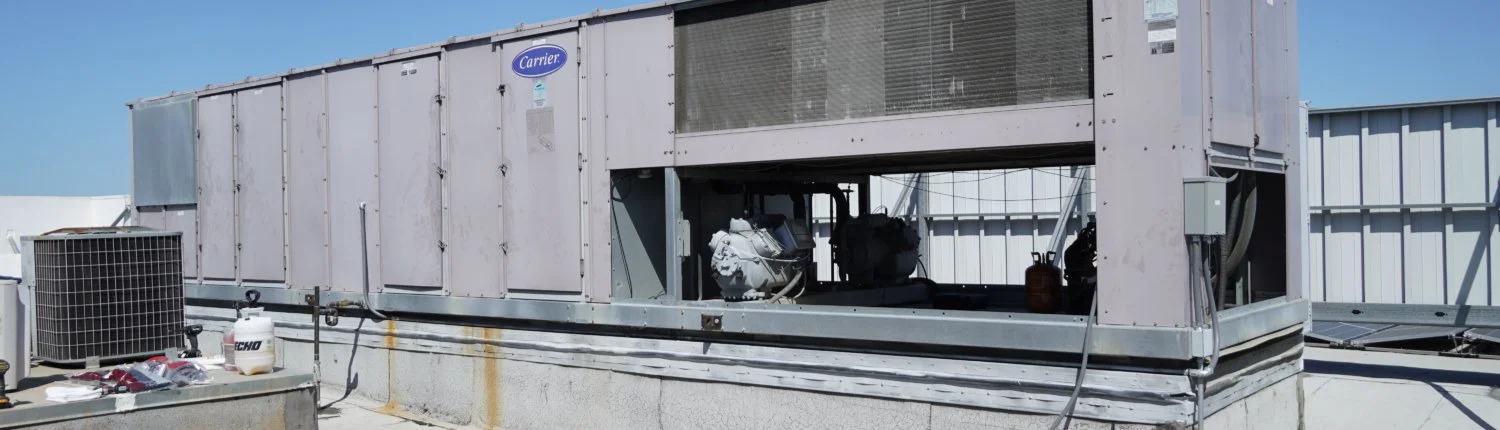
Onsite Troubleshooting
The equipment tells the real story.
A reported symptom provides a starting point. Testing determines what is actually happening inside the system.
Philco reviews the complaint, reproduces the operating condition when possible, and tests the related electrical, mechanical, refrigeration, airflow, and control components.
The diagnosis considers both the immediate failure and conditions that may cause the problem to return.
Commercial Equipment
Different systems require different service.
Correct repair begins with understanding the installed equipment, its operating sequence, and how its components work together.
Rooftop units
Commercial heating, cooling, ventilation, airflow, electrical components, and controls.
Split systems
Indoor and outdoor equipment, refrigerant circuits, controls, drainage, and airflow.
Heat-pump systems
Heating and cooling changeover, reversing valves, defrost, controls, and refrigerant operation.
EMS and controls
Communication, programming, scheduling, sensors, commands, and energy-management operation.
Older equipment
Parts research, manufacturer information, operating logic, compatibility, and repair options.
Repair Feasibility
Parts availability matters.
Older equipment is not automatically unrepairable. Philco researches correct replacement parts, manufacturer information, component compatibility, and available alternatives.
The complete condition of the equipment must still be considered. Safety, reliability, repair cost, additional failures, and expected service life affect whether a repair remains responsible.
When the proper part can be sourced and the repair remains practical, preserving the existing system may be appropriate.
The Philco Repair Process
Listen. Test. Correct. Verify.
Understand the complaint
Review what occupants or property staff observed and when the problem occurs.
Review the equipment
Check equipment condition, maintenance history, controls, visible damage, and safety concerns.
Diagnose the failure
Measure and test the system to identify the failed component and contributing condition.
Complete the repair
Replace, adjust, clean, reconnect, or repair the components included in the approved work.
Confirm operation
Restart and test the equipment to confirm response, safety, controls, and system operation.
Commercial HVAC Service
Diagnose the problem. Repair the system.
Philco diagnoses and repairs new, aging, and specialized commercial HVAC equipment with an emphasis on responsible repair.
Commercial HVAC Diagnosis, Service and Repair
Repair Before Replacement
Existing equipment may still have value.
Equipment age alone does not determine whether it should be replaced.
Philco evaluates the failure, overall condition, safety, reliability, service history, parts availability, and practical repair value.
System Diagnosis
Electrical
Power, relays, motors, safeties, wiring, and operating signals.
Refrigeration
Pressures, temperatures, compressors, coils, valves, and leaks.
Airflow
Filters, belts, fans, dampers, coils, pressure, and restrictions.
Heating
Burners, ignition, gas controls, safeties, and heat exchangers.
Controls
Thermostats, sensors, boards, schedules, staging, and response.
Onsite Troubleshooting
The equipment tells the real story.
A reported symptom is the starting point. Testing determines what is actually happening.
Philco reviews the complaint and tests related electrical, mechanical, refrigeration, airflow, and control components.
Equipment We Service
Rooftop units
Heating, cooling, ventilation, airflow, electrical, and controls.
Split systems
Indoor and outdoor equipment, refrigeration, drainage, and controls.
Heat pumps
Changeover, reversing valves, defrost, and refrigerant operation.
EMS controls
Communication, schedules, sensors, programming, and commands.
Older equipment
Parts research, compatibility, operating logic, and repair options.
Parts and Repair Feasibility
Parts availability matters.
Older equipment is not automatically unrepairable. Philco researches replacement parts, manufacturer information, and compatibility.
Safety, reliability, repair cost, additional failures, and expected service life are also considered.
When the correct part can be sourced and the repair remains practical, preserving the existing system may be appropriate.
The Repair Process
Listen. Test. Correct. Verify.
Understand
Review what was observed and when the problem occurs.
Review
Check condition, controls, history, damage, and safety.
Diagnose
Measure and test to identify the actual failed condition.
Repair
Replace, adjust, clean, reconnect, or repair components.
Confirm
Restart and test safety, controls, response, and operation.