

Commercial Energy-Efficiency Audits
Find where your building wastes energy.
Philco evaluates commercial HVAC systems to uncover operating problems, control issues, and upgrade opportunities that may be increasing energy use and operating costs.
Commercial MEP Contractor
California License #1010853
Philco Energy Services
Efficiency begins with field experience.
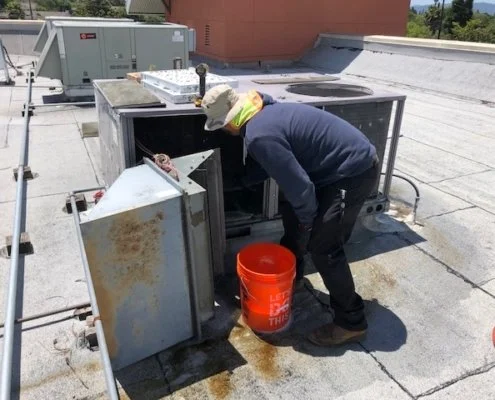
Philco Air Control works on the front line of commercial energy efficiency throughout California.
Our team participates in statewide energy-reduction programs supported by utility companies, government agencies, and nonprofit organizations.
An efficient building requires understanding how equipment, controls, ventilation, schedules, loads, and maintenance practices work together.
Opportunities We Evaluate
More than equipment replacement.
Philco examines how equipment operates today and where repairs, commissioning, controls, maintenance, or new technology may improve performance.
Variable-frequency drives
Evaluate motors, fans, pumps, loads, and operating schedules.
EMS controls
Commission, repair, or install energy-management controls.
Economizers
Inspect, repair, or replace outdoor-air economizer systems.
Energy-recovery ventilation
Assess energy transfer between exhaust and ventilation air.
Variable-refrigerant-flow systems
Evaluate VRF technology for zoning and load diversity.
Electric heat-pump systems
Examine electrification and heat-pump opportunities.
Quality maintenance
Identify dirty coils, failed controls, airflow problems, and wear.
Onsite Evaluation
The building tells the real story.
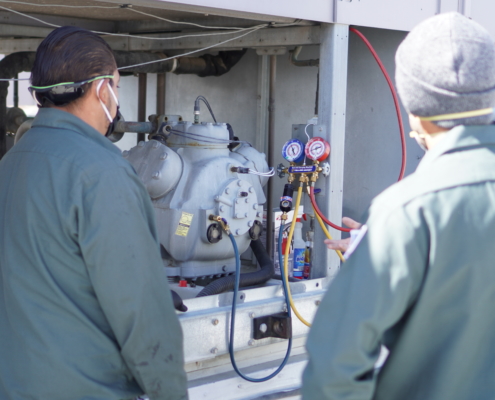
Plans and schedules are useful. Field conditions determine how the system is truly performing.
Philco reviews installed equipment, controls, ventilation, maintenance condition, and operating behavior.
The evaluation can reveal opportunities involving commissioning, economizers, motor operation, upgrades, and emerging technologies.
How We Approach an Audit
Observe. Measure. Prioritize.
Understand the facility
Review equipment, building use, schedules, and efficiency goals.
Evaluate field conditions
Inspect equipment, controls, ventilation, and maintenance.
Find viable opportunities
Separate practical improvements from unsuitable options.
Build a path forward
Organize opportunities around impact and feasibility.
A More Efficient California
Less waste. Better operation.
Efficiency should not come at the expense of reliability, ventilation, occupant needs, or correct operation.
Philco combines mechanical, electrical, controls, maintenance, and field experience to reduce unnecessary energy use.
The goal is commercial mechanical equipment operating the way it should.
Commercial Energy-Efficiency Audits
Find where your building wastes energy.
Philco evaluates commercial HVAC systems to uncover operating problems, control issues, and upgrade opportunities that increase energy use.
Commercial MEP Contractor
California License #1010853
Philco Energy Services
Efficiency begins with field experience.
Philco works on the front line of commercial energy efficiency throughout California.
We participate in statewide programs supported by utility companies, government agencies, and nonprofit organizations.
Equipment, controls, ventilation, schedules, loads, and maintenance practices must work together.
Program Experience
Opportunities We Evaluate
More than equipment replacement.
Variable-frequency drives
Evaluate motors, fans, pumps, loads, and schedules.
EMS controls
Commission, repair, or install energy-management controls.
Economizers
Inspect, repair, or replace outdoor-air systems.
Energy recovery
Assess energy transfer between exhaust and ventilation air.
VRF systems
Evaluate zoning, load diversity, and building use.
Heat pumps
Examine electrification and heat-pump opportunities.
Quality maintenance
Identify dirty coils, airflow problems, and worn components.
Onsite Evaluation
The building tells the real story.
Field conditions determine how the system is truly performing.
Philco reviews installed equipment, controls, ventilation, maintenance condition, and operating behavior.
Our Audit Process
Observe. Measure. Prioritize.
Understand
Review equipment, use, schedules, and goals.
Evaluate
Inspect controls, ventilation, and maintenance.
Find opportunities
Separate practical improvements from unsuitable options.
Build a path
Organize recommendations around impact and feasibility.
A More Efficient California
Less waste. Better operation.
Efficiency should not come at the expense of equipment reliability, ventilation, occupant needs, or correct operation.
Philco combines mechanical, electrical, controls, maintenance, and field experience to reduce unnecessary energy use.